
Viaducts
My own long-running series: hundreds of viaducts so far, and the pictures I learnt this style on.
- Client
- My own project
- Length
- Ongoing
- Tools
 Illustrator
 Photoshop
 Wacom Intuos Pro
 iMac
 Epson printer
- Enjoyed it
- ★★★★★
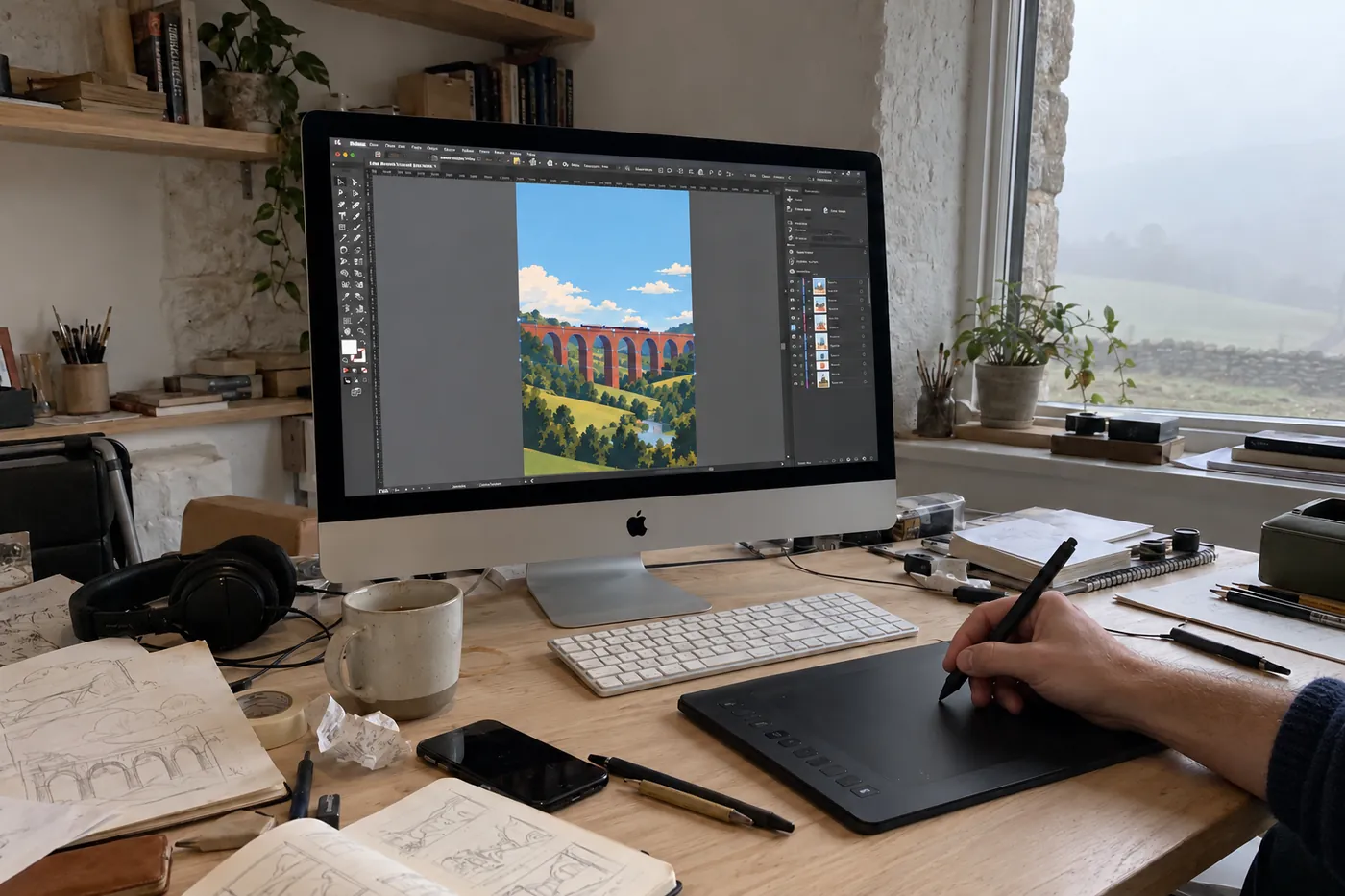
Why viaducts
A viaduct is the most confident thing anyone ever built in the countryside. Somebody looked at a valley and decided it should be level, and then made it so, with brick or stone, and it has stood there ever since looking as if it grew.
I have always liked how one makes a landscape look deliberate. The hills go on doing what hills do, and across them runs this straight, patient line of arches, like a sentence written over a drawing.
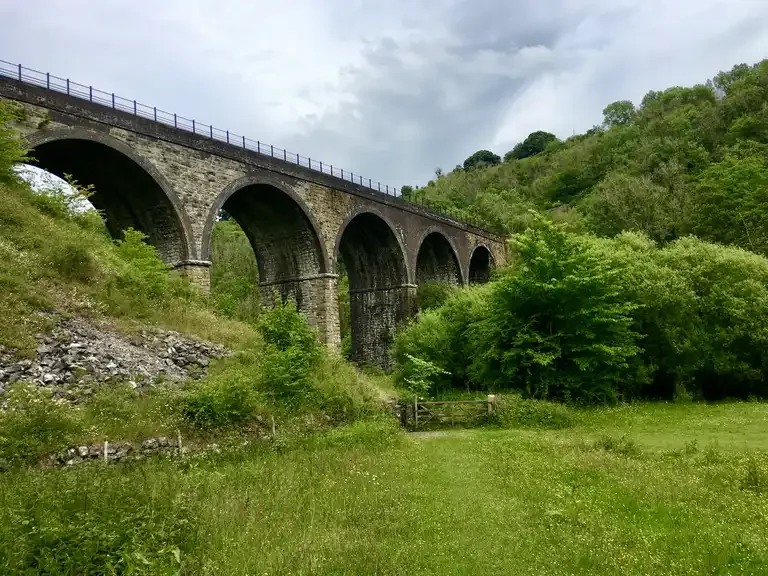
I live a short walk from one, the Headstone Viaduct over Monsal Dale, and I have drawn it more times than I can count. It is where this style came from: I drew viaducts again and again, building each one in vector and cutting it back to fewer and bigger shapes, until it looked the way I wanted. I never stopped. There are hundreds now, from the big Victorian ones everyone knows to small brick spans over streams that nobody has drawn before, in snow, in fog, at noon and after dark, and I still add one most weeks between commissions.
A few from the series
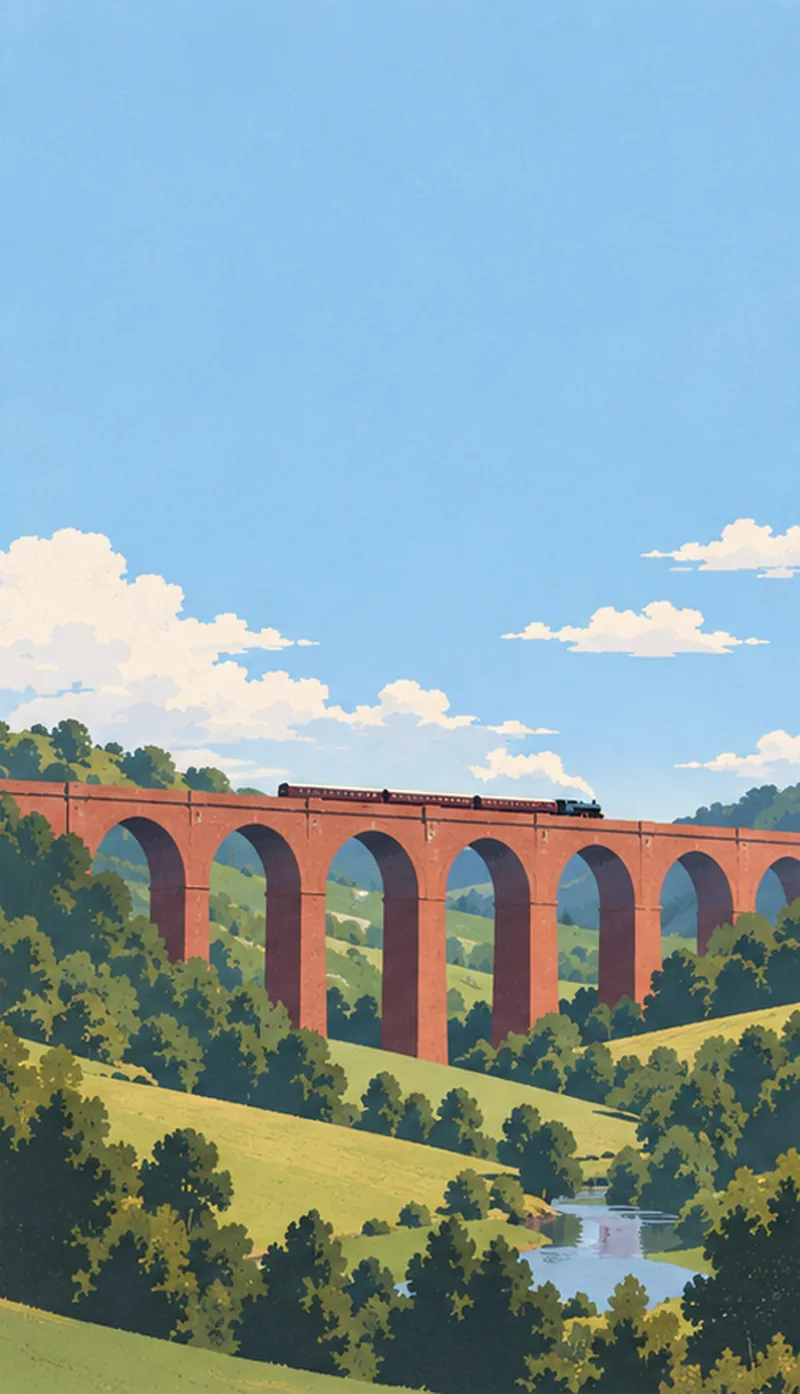
Noon is the cheerful one. A brick viaduct in full summer, everything at its greenest, a little puff of steam riding along the top. It is about as close as the series gets to an old holiday poster, and I let it be.
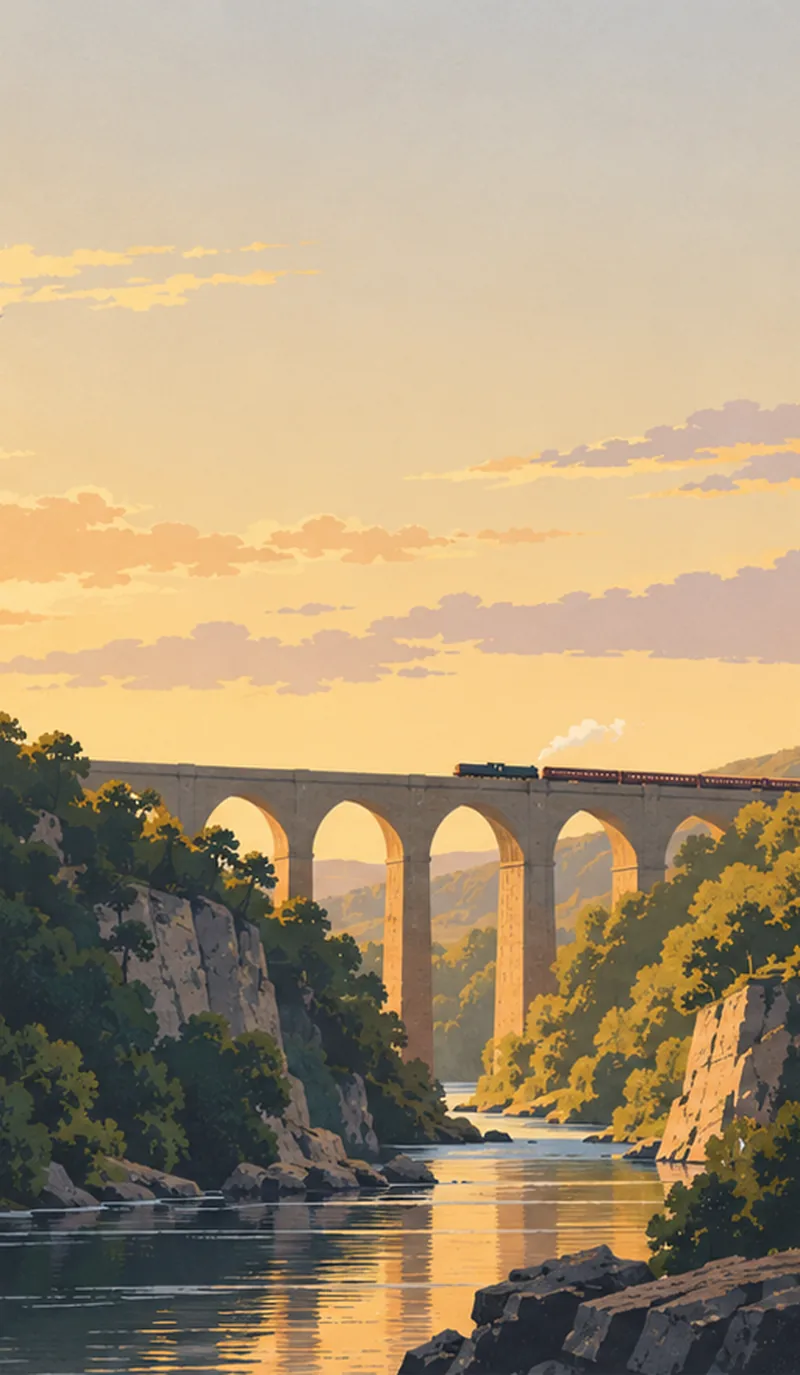
Late afternoon is all warmth and depth. A stone viaduct high over a gorge, the river catching the last of the sun, long shadows in the trees.
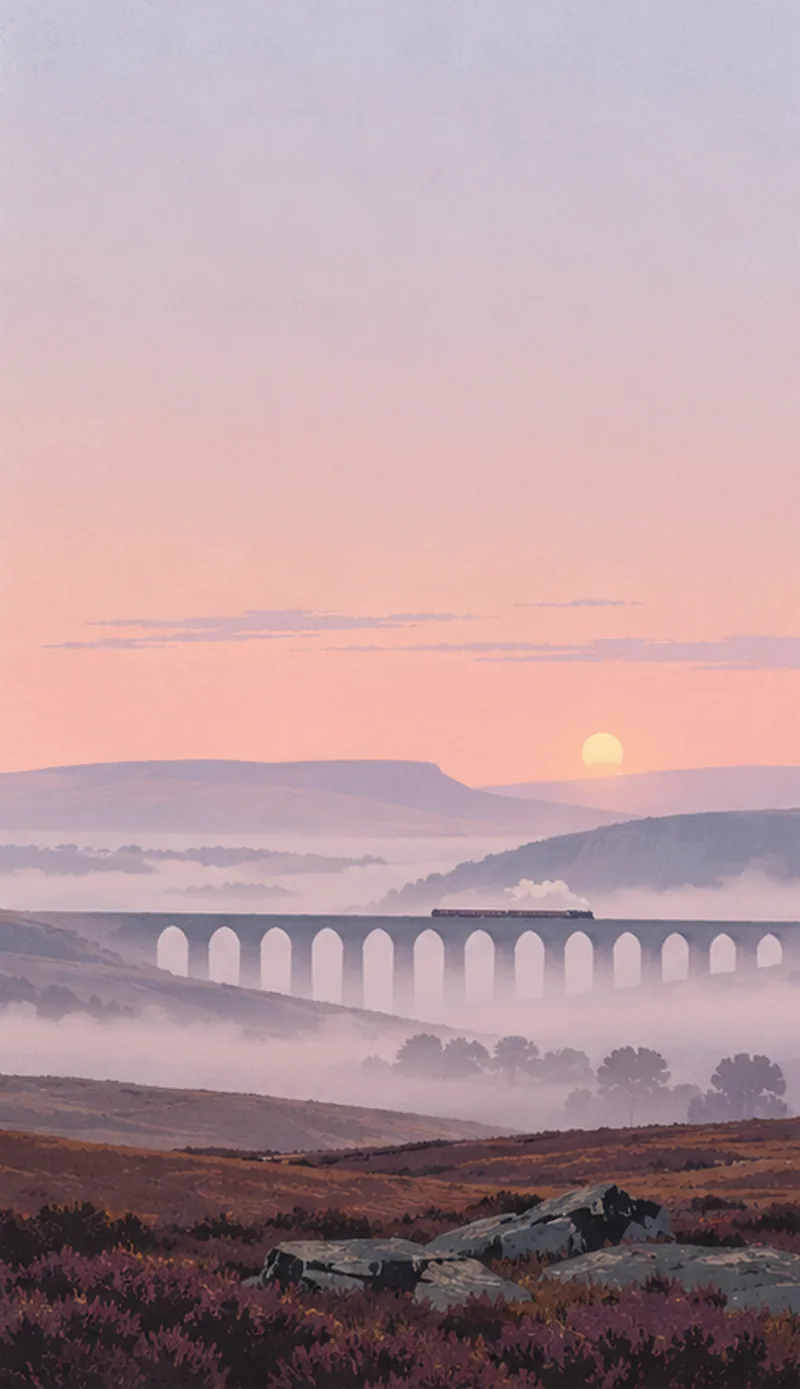
First light is the quiet one, and my favourite. A long viaduct across the moor before the mist has lifted, so the arches are only half there, and the heather is still dark.
These three are a small sample. The series runs to hundreds, and no two share a viaduct or a light, though they all keep the same palette rules, so any of them hang well together.
From a stamp to a poster
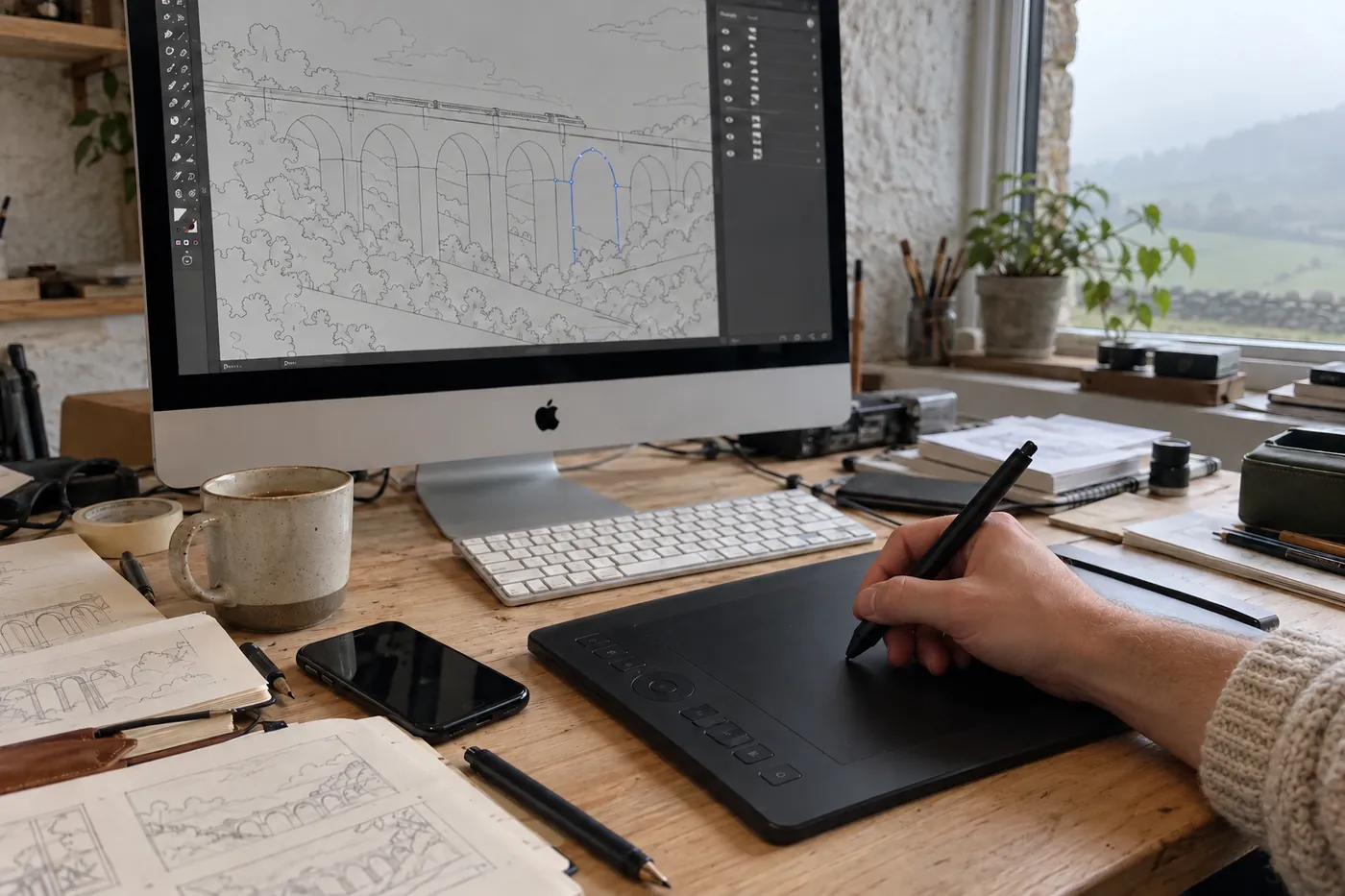
Each one started as a thumbnail no bigger than a stamp, sketched on the tablet and then filled in with the six swatches I chose for the set. If the arches still read at that size, with only the biggest shapes, the picture was ready to be drawn up.
Then the full size in Illustrator, flat shape by flat shape, with guides and snapping for the straight edges of the deck and a long time spent taking things away. The steam on the noon one was nearly cut three times.
The prints
The ones I like best are printed in small runs on heavy matt paper.
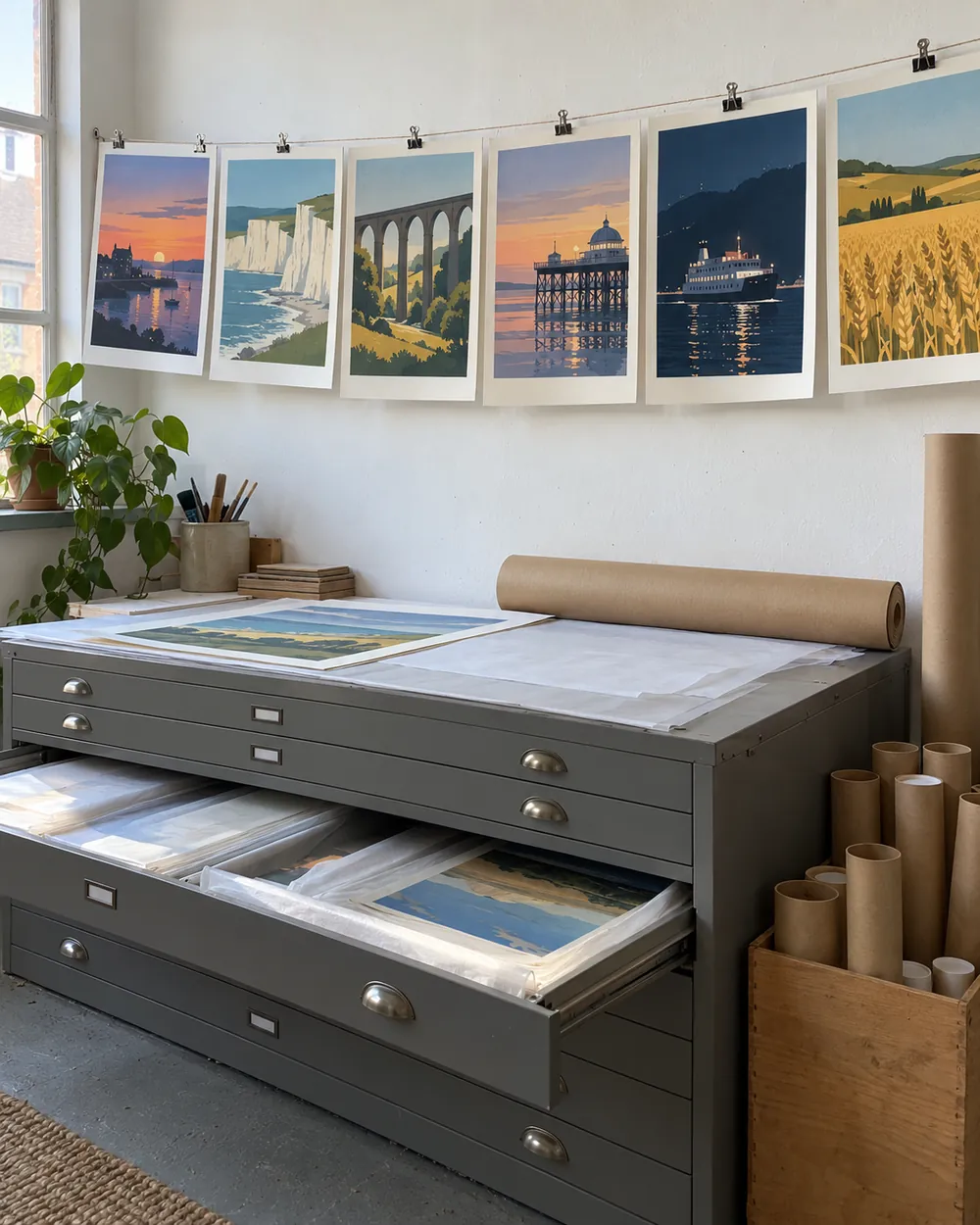
A few cafés and art studios around the Peak District sell them for me, so you may have seen one on a wall. I can also send them rolled in a tube. Ask and I will tell you what is left.