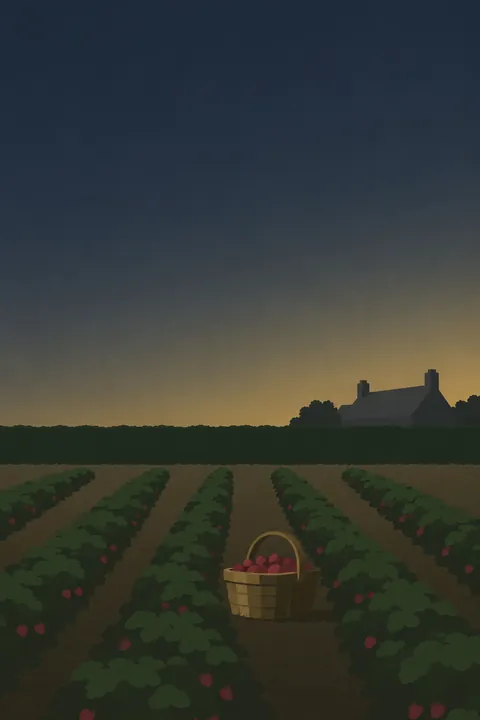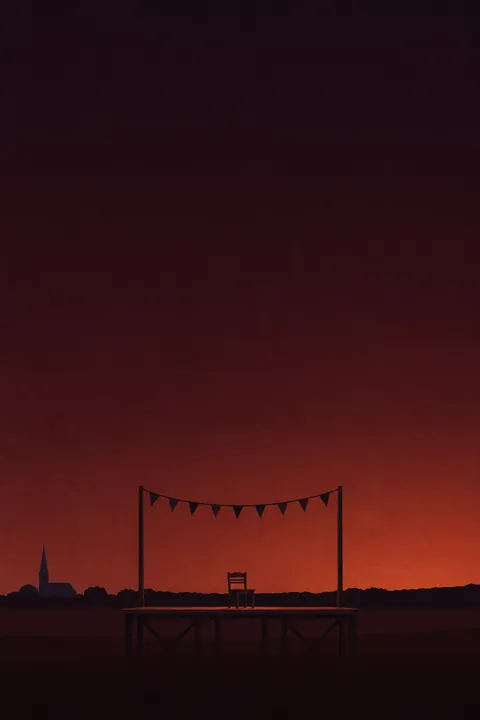
A room for every book
The Daily Canon gives its readers one great work of literature a day. I make the place each one is read in: the picture behind the words, and the weather that moves over it.
See The Daily Canon on the App Store
- Client
 The Daily Canon
- Length
- Four months, and ongoing
- Tools
 Illustrator
 Photoshop
 Nano Banana
 Figma
 Wacom Intuos Pro
 iMac
- Enjoyed it
- ★★★★★
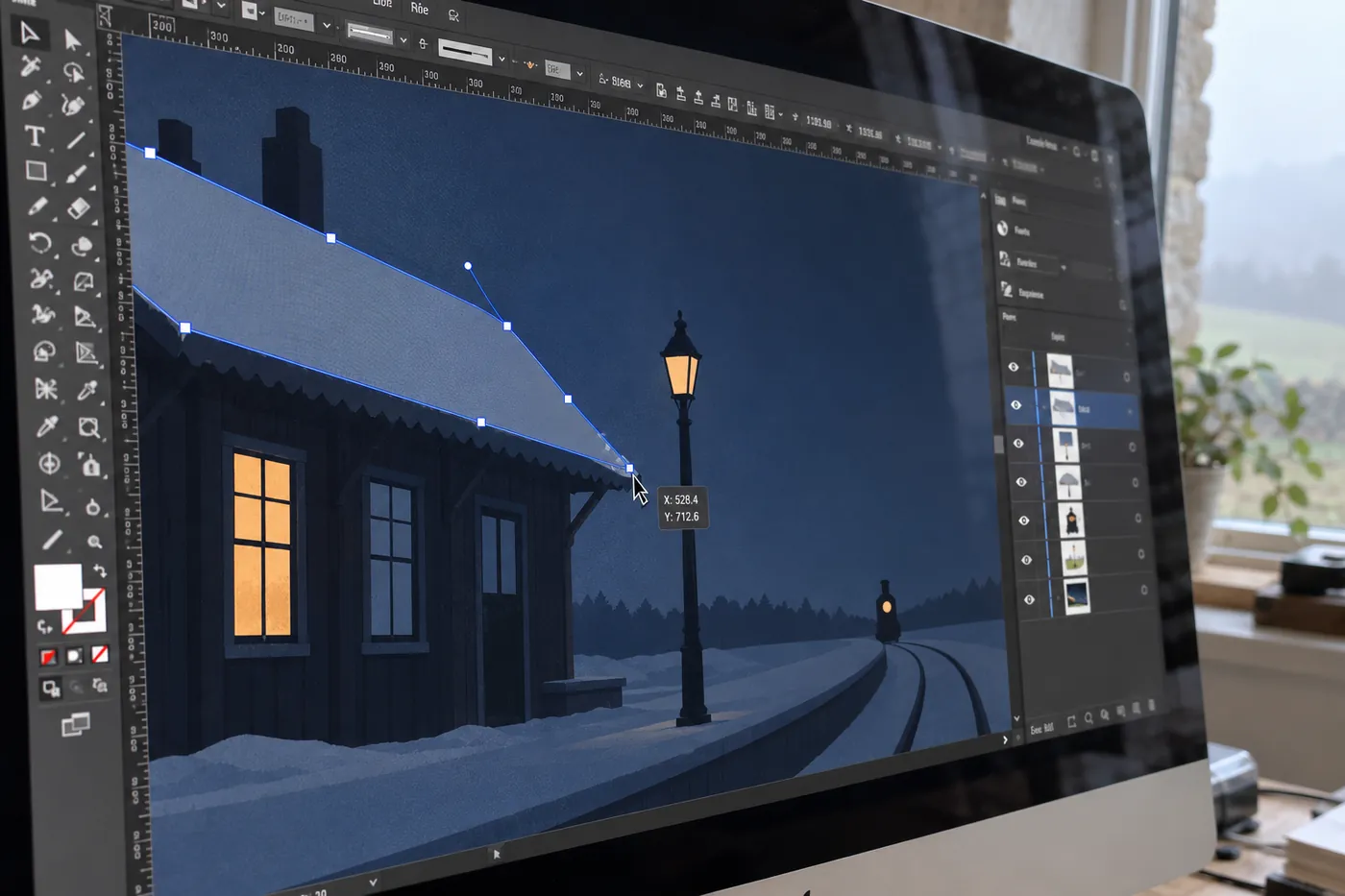
Four layers
Every page is built as a stack. At the bottom is the picture, a still backdrop. On some pages a piece or two is drawn on a layer of its own so it can move, like the whale and the boat in Moby-Dick further down. Over it, drawn live on the phone, is the weather. Over that is the light: the lamps and windows I drew are lit again from above, so they can flicker and breathe. On top sit the words, the date, the day it marks, the title and the author, in the sky the picture left empty for them. The app plays its own sound underneath, but that part is not mine.
Pull the stack apart to see it, or switch a layer off.
 1. The picture
 Leo Tolstoy
The snow drifts on a slow clock and the lamp flickers on two waves laid over each other, so it never quite repeats.
And one with things that move
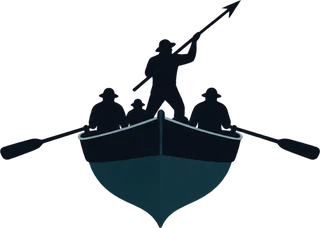
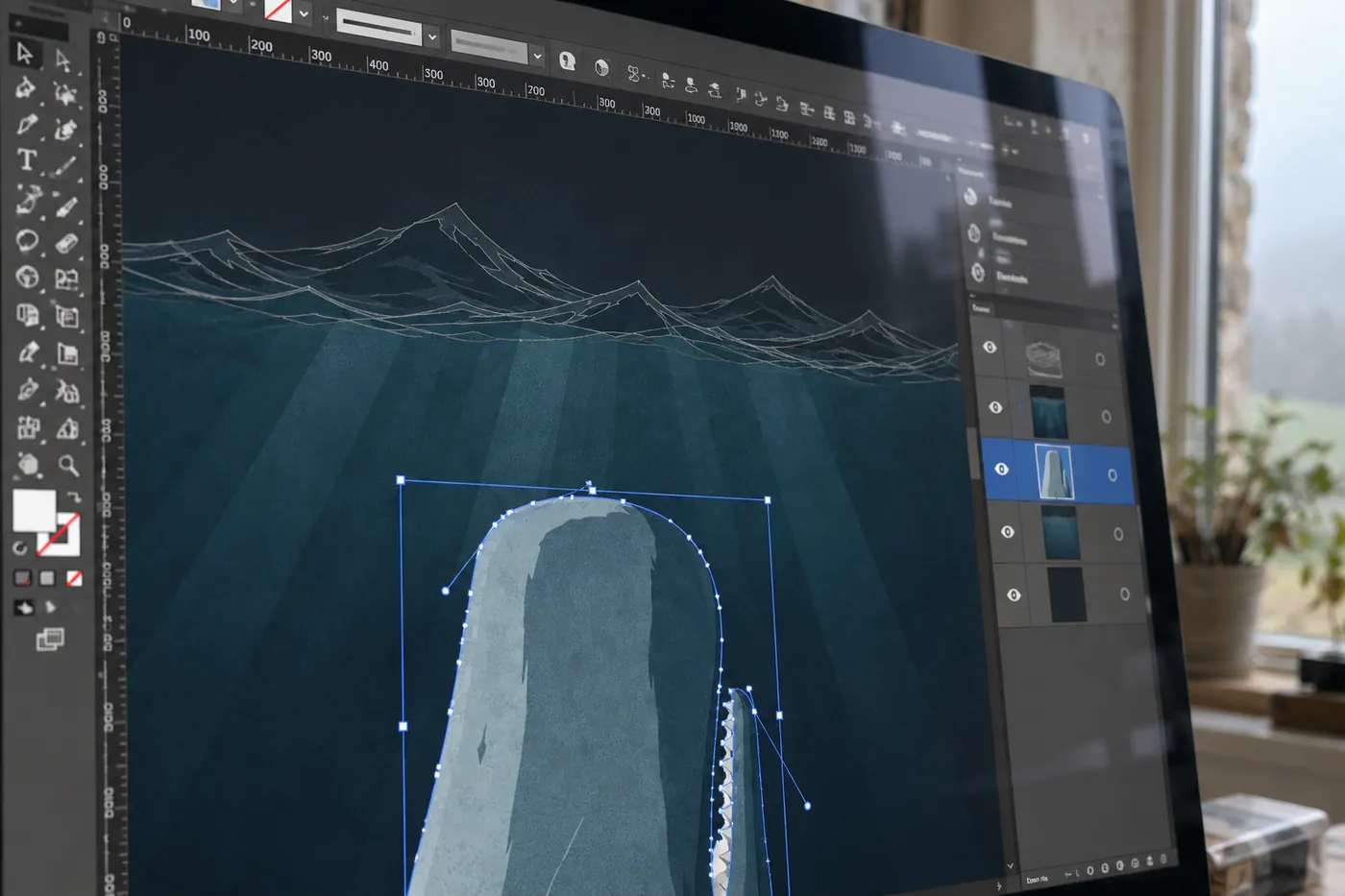
Some books need more than weather. Moby-Dick is a storm at sea, and the page is built from two more pieces laid over the sea: the whale, which climbs out of the deep, hangs under the boat and turns away again, and the whaleboat itself, riding the chop.
Each one is drawn as its own layer, so it can move on its own clock while the sea stays still beneath it.
 1. The picture

 Herman Melville
Here the whale rises and sinks on a short loop so you can always see it; in the app it takes sixteen seconds and sometimes disappears altogether. The lightning comes about every five and a half.
A brief for every book

Hal came to me with most of the thinking already done. Every day the app opens on one book, with a single line from it in the middle of the screen, and he wanted the reader to feel they had walked somewhere. He already had ideas for hundreds of them.
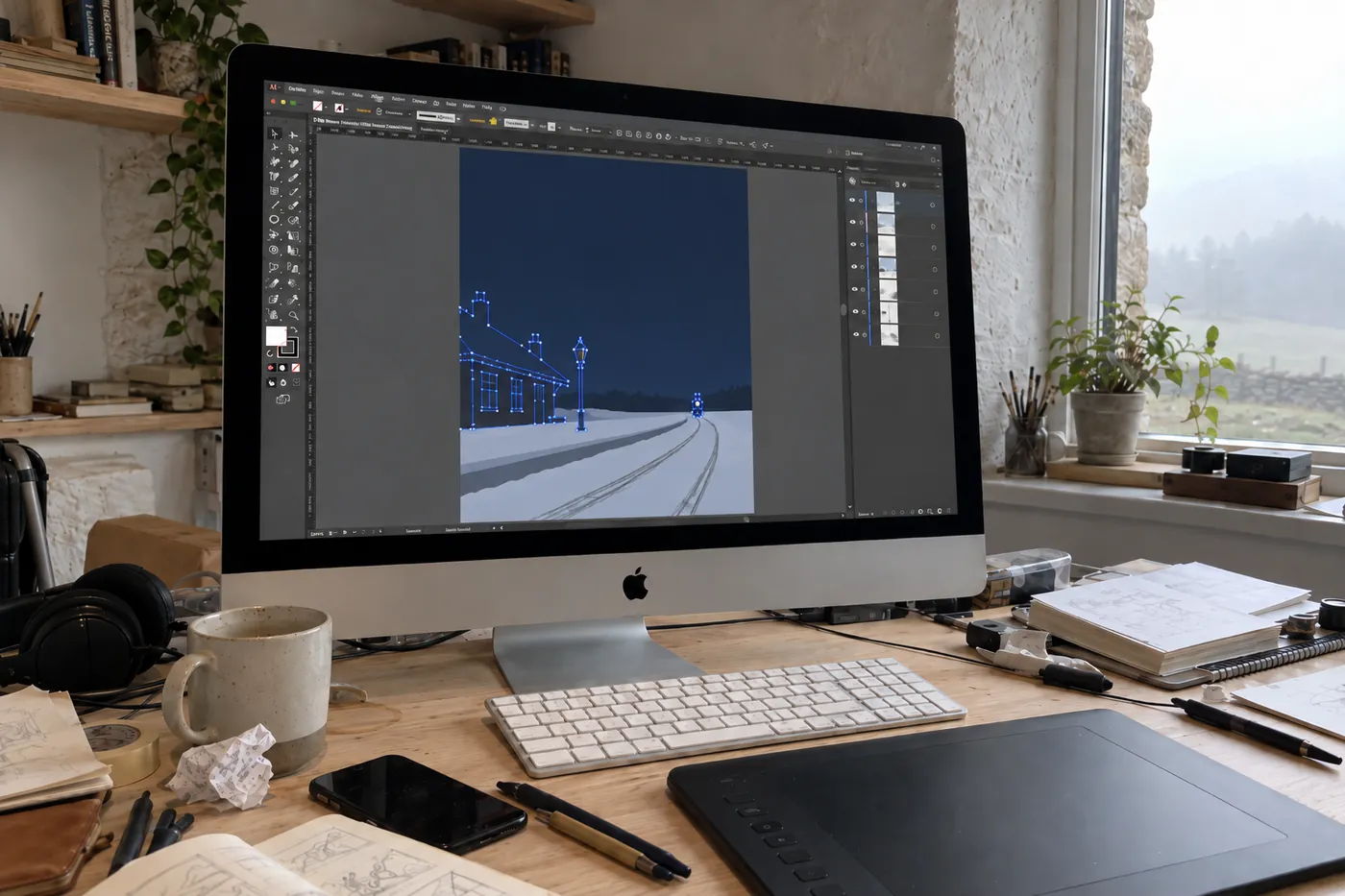
For a lot of the books he had drawn the scene himself, as best he could, in Illustrator. Those were my starting points: I took his compositions and rebuilt them in my own style. A station in the snow for Anna Karenina. A green light across the water for Gatsby. Four swords (yes, four, not three, we debated this) against a wall for The Three Musketeers.
For the others he sent a colour palette and the key images from the book. I am not the reader Hal is, and I did not always know what a book should feel like, so much of the work was talk: long chats about the mood of a novel I had never opened, what the light should be doing, how cold or warm a page ought to feel. For a lot of pages I drafted the light and the composition with an image model first, before rebuilding the shapes and taking the picture apart into layers. Then we went back and forth until it was right.
A picture that knows where the words go

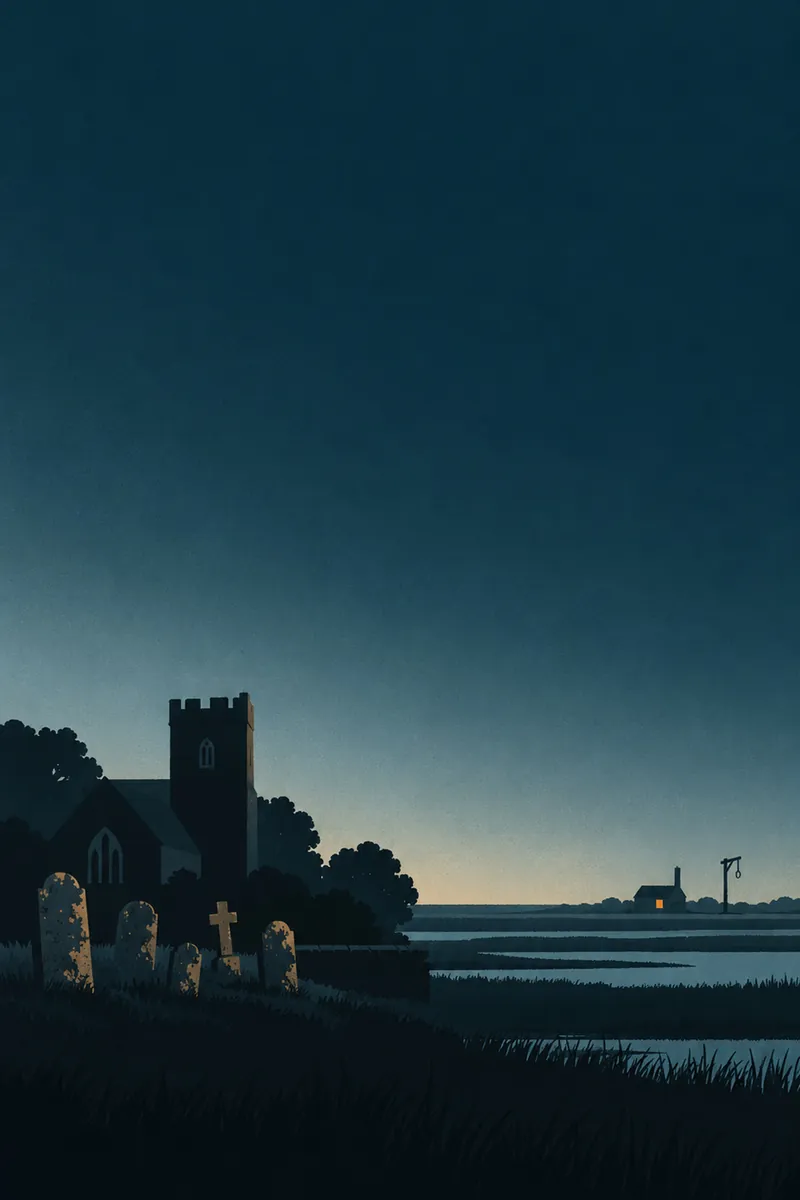
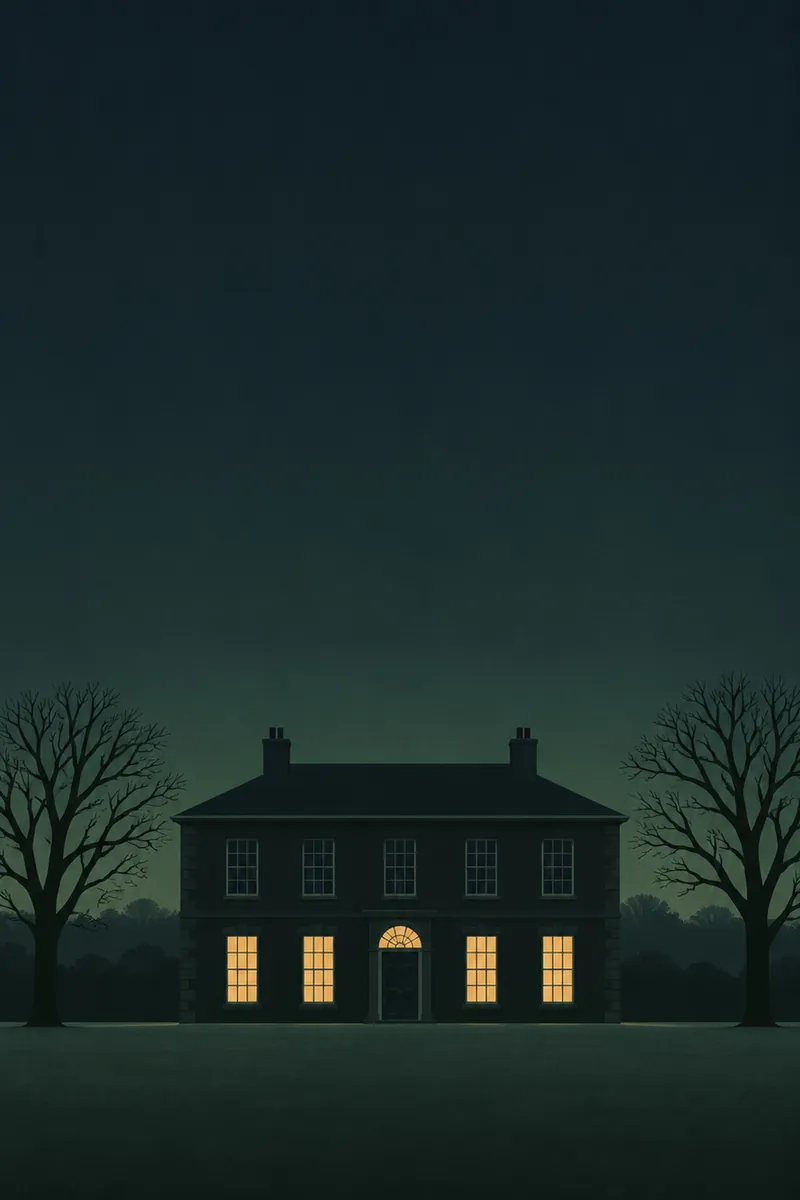
The middle stays quiet. The title and the line sit in the top half of the screen, so the top half of every picture is mostly sky. The subject lives low, in the window between the words and the bottom of the phone. A quiet sky is not a calm one: on Frankenstein that open sky is where the storm plays out, drawn live over the picture.
One light. A lamp, a window, a moon, a sun going down. Never two competing.
Hardly anyone in the picture. Early on we took the people out of almost every page, and the pictures got better for it. Mostly I draw what they left behind: the lit windows of a house, a bench, swords set against a wall. When a book cannot do without them, like the whaleboat in Moby-Dick, they stay small and in silhouette.
Fewer, bigger shapes. Two or three tones to an object, a faint grain like a screenprint, and nothing you could count. If in doubt, leave it out.
Pictures that breathe
None of these pages is a still. Hal built the weather to my notes and we tuned it together, one book at a time: snow that drifts, rain that finds the ground, a lighthouse beam that turns once every eight seconds, a boat that rises a point or two on the swell.
Everything moves on a slow clock. You should be able to read a whole page and only notice afterwards that the snow was falling.
The storm here is turned up so you can see it: heavier rain and a flash of lightning every few seconds.

A few more rooms